


Hyprop Central and Eastern Europe Trip 30 September to 3 October 2024
Introduction
The purpose of the trip was to visit all Hyprop Investments' Central and Eastern European (CEE) assets located in Croatia, Bulgaria, and North Macedonia. These assets comprise 30% of Hyprop's portfolio by value and 36% of distributable income. The last investor and analyst trip was in October 2017 and included visits to the Serbia and Montenegro retail assets, which have since been sold.
The Mall, Sofia, Bulgaria
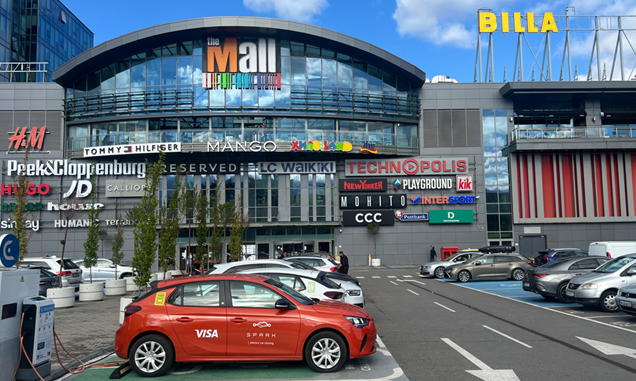
The trip started in Sofia, Bulgaria. There are no direct flights from South Africa to Bulgaria, but it's easy to connect from the major European airports such as Paris, Frankfurt, Istanbul, and Zurich. The layovers are short.
Bulgaria has a population of about 6,7 million people, and Sofia, the capital city, stands at 1,3 million. Bulgaria is a member of the EU and NATO. It recently passed a law that requires the adoption of the euro. However, there are some conditions to be met, including price stability. The Bulgarian lev has been pegged to the euro since 1999. The Schengen zone for Bulgaria applies only to sea and air travel. Land border controls remain in place. The country has one of the lowest tax rates - a 10% flat corporate and individual tax rate. The economy is projected to grow at about 3% in 2024. The unemployment rate is about 4%.
The Mall is 62,000m2 in size, making it the third largest centre in Sofia after Paradise Centre (80,000m2), owned by NEPI Rockcastle (NEPI), and Sofia Ring Mall (70,000m2). The fourth largest centre is Serdika Center (51,000m2), which NEPI also owns. The Mall is about a 10-minute drive from the airport and is located within the major office node and next to a highway leading to the city centre. A new subway line is planned for 2027 with a station in front of The Mall.
Turnover is up 8% year-on-year to June 2024, and foot count and vehicle count are up 5% and 3%, respectively, over the same period. The space vacated by Carrefour a few years ago has been redeveloped and let, and the mall was extended by about 11,000m2 to accommodate various types of retail tenants. There are huge new LED screens, staircases, an ATM zone, and a slide for kids to play. It’s a big step from 2017 when I last saw this asset. Several refurbishments have been done over the last few years, including the food court, bathrooms, parking, and shopfronts. Some recent marketing events include a cat show, a Lego expo, a wine event, a lunar event, and robotics for kids.
The Mall is virtually fully let and trading well even without the Inditex group exposure (Zara, Bershka, Pull & Bear, Massimo Dutti, Oysho, Stradivarius, and Uterque). It has a 0.4% vacancy (1 store 248m2), lower than the average of 2% to 3% in the Sofia market. It has no available bulk. No new malls are being built except for a big scheme in Plovdiv, the second largest city. Most of the latest retail space supply is in the form of retail parks, which are currently fully let. Bulgaria has one of the lowest retail saturation rates in the CEE region.
Old Mutual Property recently bought an office building adjacent to The Mall through its joint venture with AG Capital, known as Lion's Head.
Skopje City Mall, Skopje, North Macedonia

There are no direct flights between Sofia and Skopje. The most feasible option is to drive and the distance is about 250km. It took longer because of the peak morning traffic getting out of Sofia and a lot of roadworks once we crossed the border into North Macedonia. The highway is being upgraded and expanded.
North Macedonia is not part of the Schengen area or EU, but a Schengen visa allows entry into the country. There is an application to be part of the EU, but the process could take time. The country has been a NATO member since 2020. The Macedonian Denar is pegged to the euro. Like Bulgaria, North Macedonia has a 10% flat tax rate. The country's population is about 1,8 million, and the capital city, Skopje, has about 526,000 residents. The unemployment rate has steadily declined, from 22% in 2017 to 13% in 2023. After a 1% decline in 2023, the economy is expected to grow by 2.6% in 2024.
Hyprop is the only South African-listed property entity with exposure to North Macedonia. Skopje City Mall is 36,800m2 and is the premium mall in Skopje. It has a superior location and is fully let. Trading densities have continued to increase and are up 8% year-on-year, and the mall is fully let. This is despite the entrance of new malls, including the 57,000m2 Eastgate Mall, 48,000m2 Diamond of Skopje, and the 10,500m2 Cevarhir Mall.
These malls opened in 2021, 2023 and 2024 respectively.
Skopje City Mall is fully let despite the average vacancy rate in the city being 12%, mainly due to the new schemes, which have higher-than-average vacancies. While the mall space appears saturated, the market believes Skopje and the country can accommodate retail parks. Like in Sofia, existing retail parks are fully let.
Skopje City Mall has been completely renovated and offers a great ambiance, food, and beverage offerings, as well as lovely outdoor areas. It's a significant improvement from the last time I visited in 2017. The mall houses Inditex brands, and despite the increased retail supply in the city, it has several brands that are exclusive to the mall. There is no available bulk, but management is exploring better use of existing space to accommodate the Inditex group further. Recent upgrades include bathrooms, terraces, the food court, the playground area, main corridors, and entrances.
Some recent marketing events include the Skopje Fashion Event, running clubs, a basketball tournament, the Santa Claus race, a women's artist's bazaar, Chocolate Day, and the Gin Lane festival.
City Center one West and City Center one East, Zagreb, Croatia

The flight from Skopje to Zagreb is only an hour. Croatia is a member of NATO, the EU and the Schengen zone. It has a population of about 3,9 million, with 800,000 residing in Zagreb. Unemployment has decreased from about 17% in 2014 to 4.8% in 2024. Zagreb, the capital city, has a 2,6% unemployment rate. The economy grew by 2.8% in 2023 and is expected to grow at about 3% in 2024 and at similar levels in 2025 and 2026. Tourism is one of the key economic drivers. Croatia recently switched currencies from the kuna to the euro. The initial move resulted in higher inflation levels of over 10%, but the inflation rate has decreased to less than 5%.
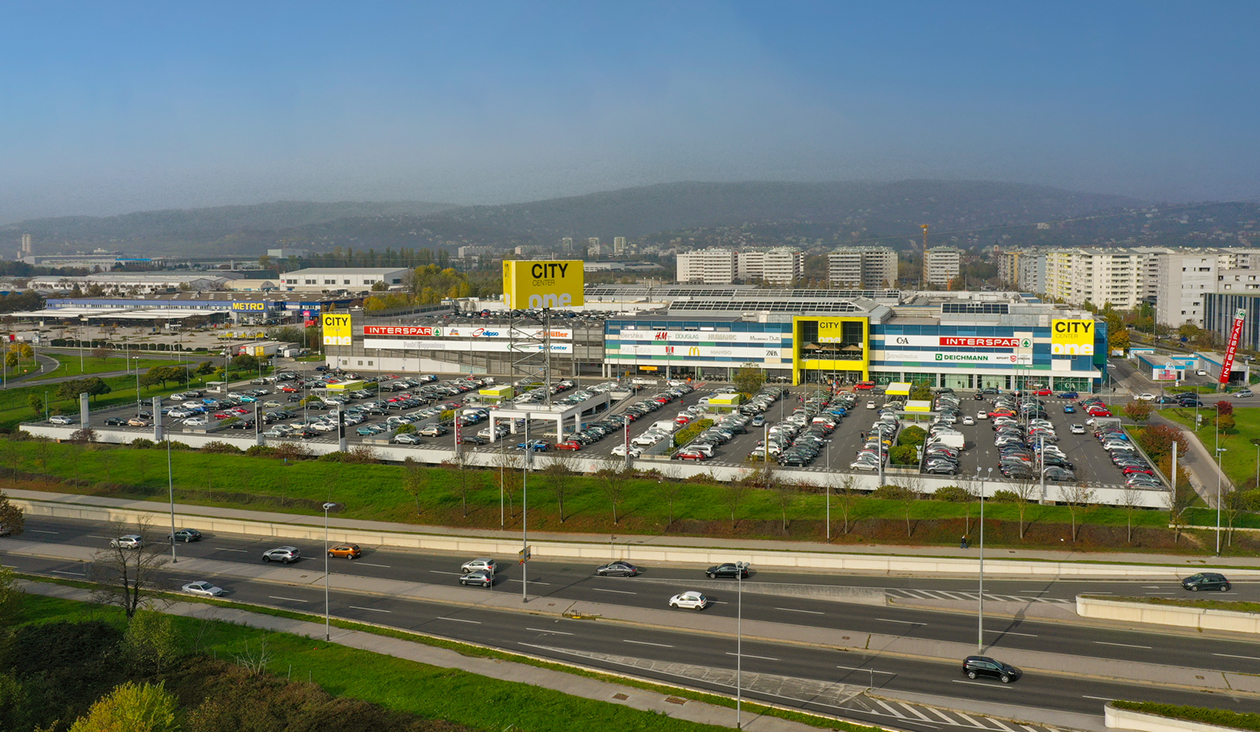
Hyprop owns two malls in Zagreb: City Centre one West with a total GLA of 48,800m2 and City Centre one East of 48,600m2, which are the third and fourth biggest malls in Zagreb after Focus Invest GmbH's West Gate City (95,600m2), and NEPI's Arena Zagreb (68,000m2).
The average vacancy for prime shopping centres is less than 3%. Despite the low vacancy, there is minimal development activity. The focus has shifted to retail parks, which comprise 29% of the total retail stock, compared with 12% in 2013.
Both Hyprop centres are 100% let and have exposure to major retailers and fashion brands, including Inditex. The centres are managed by CC Real, an entity headquartered in Vienna, Austria, with local offices in Croatia. City Centre one West and City Centre one East experienced strong performance over the last year to June 2024, with turnover up 11.4% and 10.9%, spend per head up 15.8% and 13.3%, and foot count down 3.8% and 2.1%, respectively. The decreased foot count was mainly due to the non-working Sundays Trade Act, which allows retailers to operate only 16 Sundays per calendar year and they are not allowed to trade on public holidays.
The food court at City Centre one West has been extended and upgraded. Some marketing highlights for both centres include kids' events, sports events, and image campaigns. The Yellow Wednesday campaign has been very successful. It offers special deals and discounts every first Wednesday of the month, and over 80% of the tenants participate. This boosts turnover and foot count by 15% to 40% compared to other Wednesdays.
The trip ended in Zagreb, Croatia. There are no direct flights between Croatia and South Africa, but several flights are available with one connection and a few hours of layover.
Conclusion
When Hyprop ventured into the CEE property market in 2016, some sceptics raised concerns about the strategy. However, looking back, it's clear that the move into the market was warranted. Not only did management sort out the structure by implementing the Hystead liquidity event, but they also took 100% control of the EE core portfolio and executed improvements that transformed Hyprop's CEE exposure into a robust portfolio and currency diversifier, significantly boosting Hyprop's returns.
Hyprop's strategic focus on capital cities within the CEE region has paid off. With ownership of the most dominant asset in North Macedonia, alongside key retail properties in Sofia and Zagreb, Hyprop has established strong presence in prime locations. These assets are not just fully let, they are trading well, reflecting the demand for vibrant retail space in these markets.
A key differentiator is Hyprop's commitment to actively managing these properties with local teams who fully understand the market dynamics. Continuous upgrades within the centres have transformed the shopping experience, and the ongoing enhancements to the tenant mix continue to elevate the overall appeal of the centres.
Keillen was a guest of Hyprop Investments on the CEE trip, along with other South African listed property portfolio managers, analysts, and bankers. He financed the cost of his trip. The data/statistics have been sourced from management and various presentations provided during the site visits.
ENDS